

by: JGK Staff
A monumental surge in North American Class 8 commercial truck orders has caught the attention of industry analysts, as fleets aggressively move to secure manufacturing slots ahead of sweeping regulatory changes.
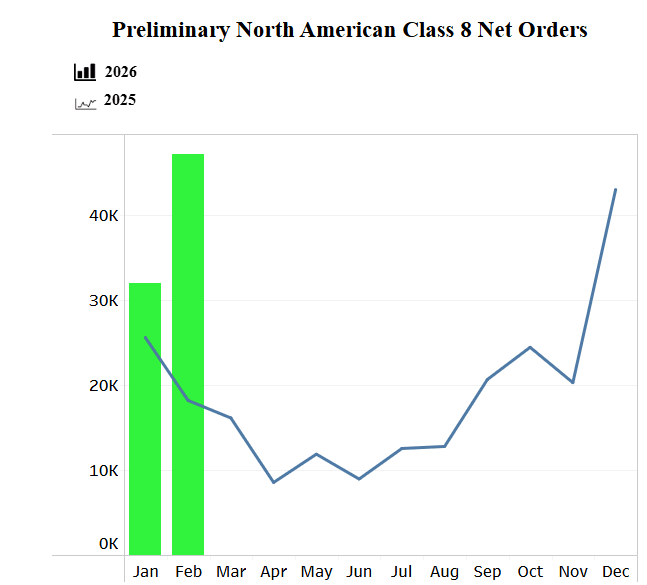
Recent data from transportation research authorities, including ACT Research and FTR, reveals that preliminary net orders for Class 8 vehicles hit just over 31,000 units last month. This marks an astronomical year-over-year increase of more than 230 per cent compared to the same period last year. While headlines suggest an unprecedented explosion in truck sales, analysts caution that the eye-popping figures reflect a surge in future manufacturing commitments rather than immediate keys changing hands on dealership lots.
This dramatic spike is largely driven by a classic “base effect,” as order books from twelve months ago sat at a cyclical nadir. However, the primary catalyst pushing fleets into action is the looming Environmental Protection Agency (EPA) 2027 emissions mandate. Set to impose strict new standards on nitrogen oxide (NOx) emissions, the upcoming regulation is expected to significantly increase truck acquisition costs, alter maintenance requirements, and introduce technological uncertainties. Consequently, carriers are eagerly locking in remaining 2026 build slots to maximize their acquisition of proven, pre-regulation powertrains.
Furthermore, standard long-haul tractors are not the only vehicles driving this momentum. Heavy vocational spec trucks are experiencing a parallel demand boom, fueled by sustained investments in continental infrastructure, electric utility grid modernization, and the massive physical footprint expansion required by artificial intelligence data centres.
For Canadian carriers and owner-operators, the operational reality mirrors the United States exactly. Because the Canadian commercial vehicle ecosystem is fully integrated with its southern neighbor—sharing identical original equipment manufacturers (OEMs), cross-border freight corridors, and supply chains—the pre-buy rush is being felt with equal intensity north of the border. Canadian fleets are moving decisively to ensure they are not left holding the bag when 2026 production lines completely sell out.
While actual retail deliveries remain steady and disciplined as carriers navigate high financing rates and tight freight margins, the order books tell a different story. The massive 230 per cent jump is not a sign of sudden industry over-expansion, but rather a highly strategic, defensive play by North American logistics giants ensuring their fleets remain competitive, compliant, and cost-effective for years to come.