

By: JGK Staff
The Alberta government has removed 20 unsafe commercial trucking companies from provincial highways following a targeted enforcement sweep aimed at curbing severe safety violations, fraudulent training schemes, and regulatory evasion.
According to details released by Minister of Transportation and Economic Corridors Devin Dreeshen, provincial authorities have issued 443 administrative penalties and blocked dozens of non-compliant operators since the crackdown expanded.
A primary target of the enforcement campaign is the proliferation of “chameleon carriers”—operators that deliberately attempt to evade safety oversight, outstanding fines, or regulatory bans by shutting down, changing corporate names, and re-registering under new entities or across different provincial jurisdictions. Officials revealed that 13 of the 20 shuttered companies were identified as chameleon operations. In addition, documentation reviews prevented another 40 suspected chameleon carriers from receiving safety fitness certificates.
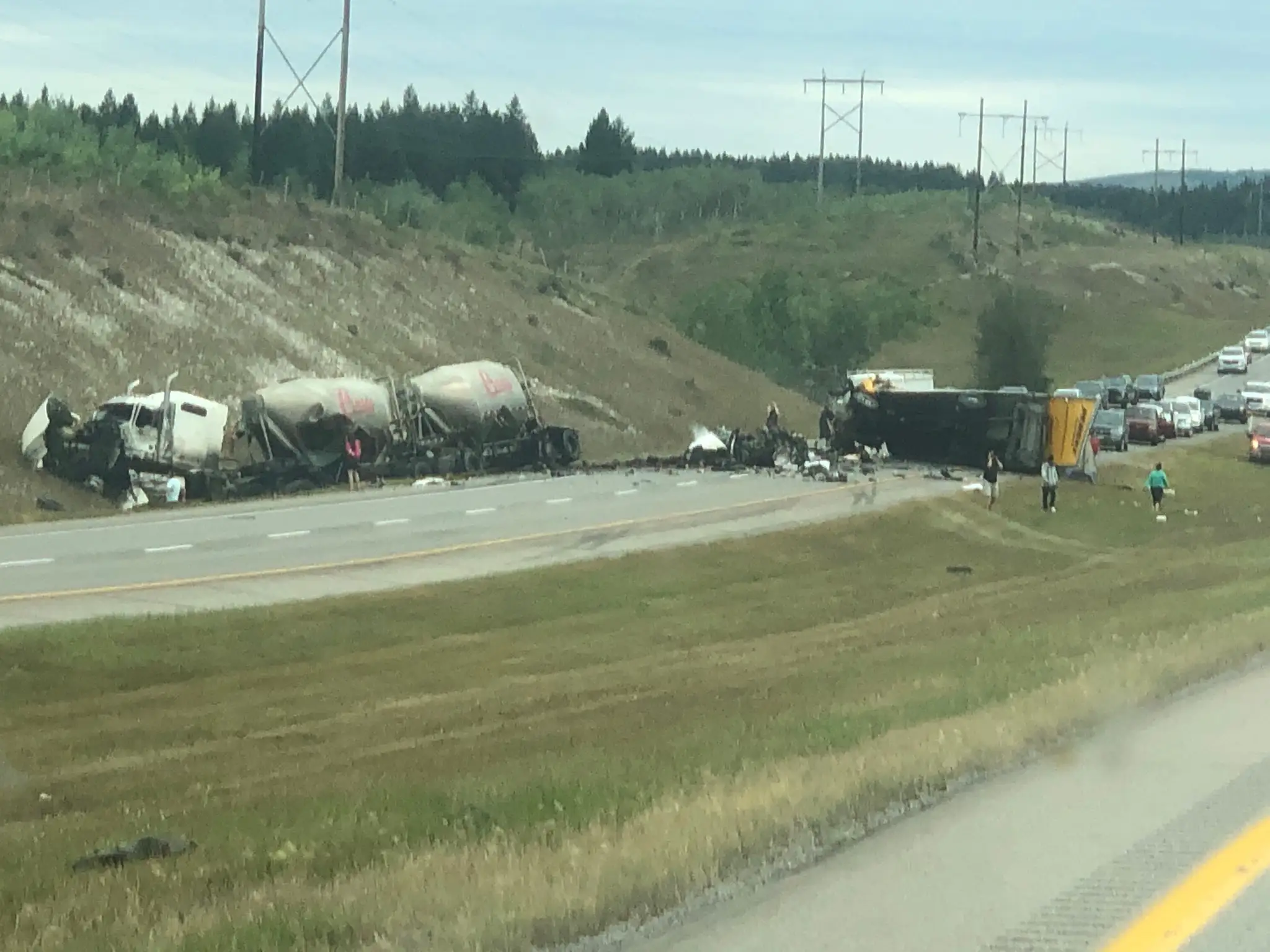
The heightened enforcement follows high-profile incidents, including a fatal crash in Brandon, Manitoba, involving Conquer Transportation Inc. Alberta investigators discovered the carrier engaged in “wilful and sustained non-compliance” and had previously operated under a revoked registration in Manitoba before re-establishing itself under a slightly altered name in Alberta. The province subsequently downgraded Conquer Transportation’s Safety Fitness Rating to “Unsatisfactory” and issued $16,500 in administrative penalties, permanently ending its operations.
Beyond carrier closures, the crackdown targets driver training standards and labor misclassification schemes. Alberta transportation officials have audited 95% of the province’s licensed Class 1 driving facilities, resulting in the closure of five fraudulent training schools. Authorities are also focusing on the “Driver Inc.” model, where commercial carriers improperly classify employees as independent contractors to bypass labor laws and standard safety protocols. Recent driver status inspections revealed that approximately 20% of checked commercial drivers were suspected of operating under improper classifications.
To prevent carriers from exploiting interprovincial loopholes, Alberta is partnering with federal, provincial, and territorial counterparts alongside the Canadian Council of Motor Transport Administrators to develop a centralized national tracking database.
“Our families’ safety won’t be put at risk by reckless operators who ignore the rules,” Dreeshen stated regarding the province’s zero-tolerance policy. “Anyone cutting corners or operating unsafe trucks will be removed from our roads.”