


By: BCTA/Safety Driven
Why BC Carriers Must Adapt to a New Reality
In March 2026, the BC Trucking Association reviewed 20 years of transborder freight data from the U.S. Department of Transportation to better understand how goods are moving by truck between British Columbia and the United States.
The review looked at truck freight moving through BC’s 17 land border crossings between 2006 and 2025, connecting BC with Washington, Idaho, Montana, and Alaska. The findings point to a clear shift: cross-border trucking volumes have been steadily declining since 2022 and have not returned to the highs seen during the post-pandemic rebound.
That matters because the decline does not appear to be primarily driven by recent U.S. tariffs. Instead, the data suggests a longer-running structural downturn that was already underway before tariffs became a major part of the conversation.
Long-Term Trends
After the 2009 global economic slowdown, cross-border trucking volumes between BC and the U.S. climbed steadily. That trend was interrupted in 2020 during the pandemic, followed by a sharp rebound in 2021 and 2022 that pushed activity above pre-pandemic levels.
But beginning in 2022, that momentum shifted. Trucking volumes have declined consistently since then, continuing through 2025. The pattern suggests the sector is facing deeper economic and competitive pressures, rather than a short-term disruption.
 Commodity Trends Tell a More Detailed Story
The slowdown is not affecting every commodity group in the same way.
In the Canada-to-U.S. direction, wood and wood products have seen the most significant decline, falling 38% since 2021. Given the historical importance of forestry to BC’s export economy, this decline has a major influence on overall freight trends.
At the same time, some categories are moving in the opposite direction. Machinery and electrical goods increased 59% over the same period, while foodstuffs rose 24%, showing that some sectors remain resilient despite the broader slowdown.
In the U.S.-to-Canada direction, machinery and electrical goods remain the dominant commodity group entering BC. However, transportation equipment has pulled back sharply, declining 39% since 2022.
Together, these trends show that the cross-border slowdown is not a universal collapse. It is concentrated in specific sectors, while others continue to grow.
Border Activity Remains Highly Concentrated
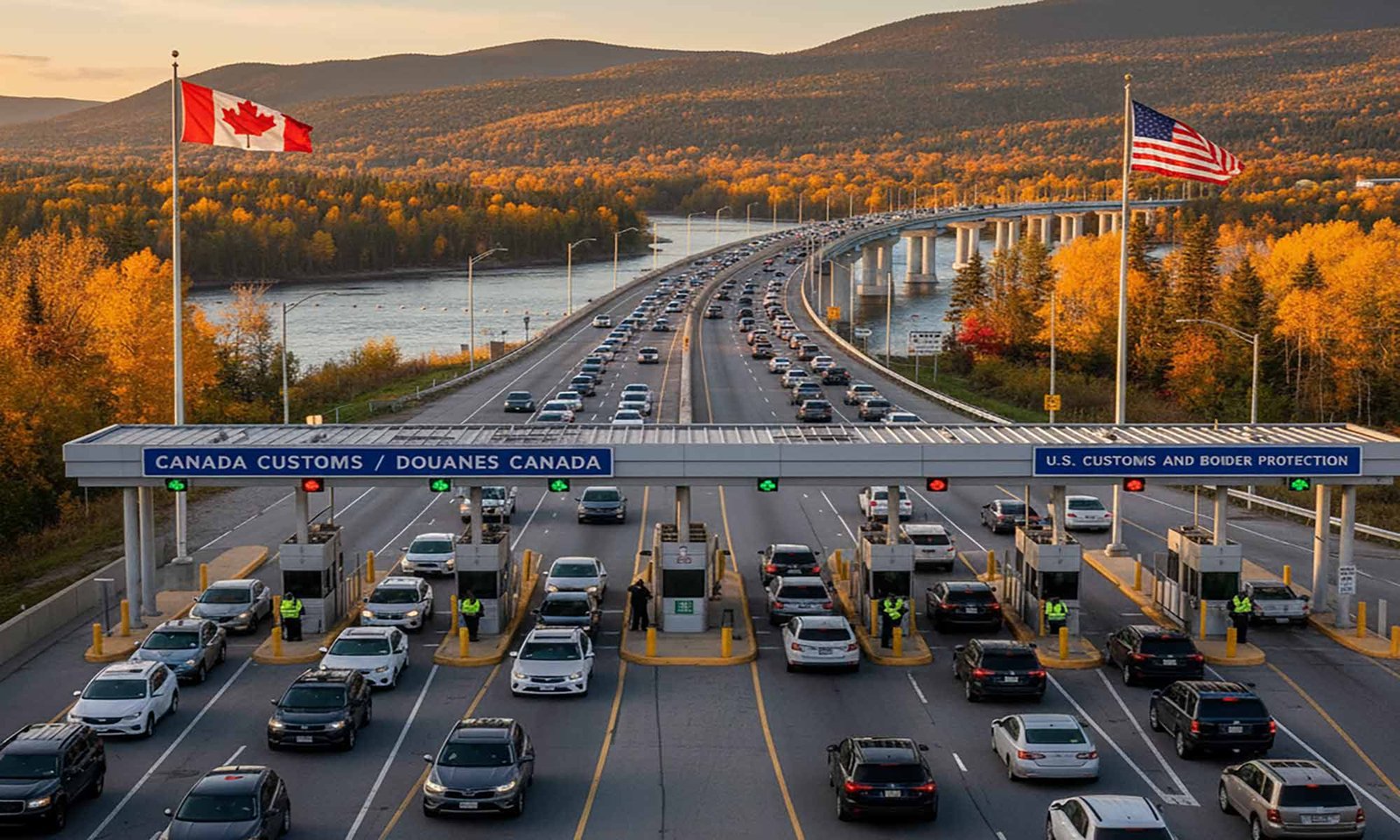
BC’s cross-border truck freight continues to move through a small number of major crossings. The Douglas / Pacific Highway crossings in Surrey remain the dominant hub, accounting for roughly two-thirds of all truck freight by dollar value over the 20-year period.
The next largest crossings are Abbotsford-Huntingdon, Kingsgate, Osoyoos, and Aldergrove. Together, the top five crossings handle 98% of all truck freight moving between BC and the United States.
While the overall distribution has changed only modestly over time, Kingsgate has become more important, overtaking Abbotsford-Huntingdon as BC’s second busiest commercial crossing by 2025.
 Key Takeaways
The analysis points to three important conclusions.
First, the downturn is real and persistent. Cross-border trucking volumes have been declining since 2022, and the trend predates the current tariff discussion.
Second, the slowdown is sector specific. Wood product exports and transportation equipment moving into Canada have declined sharply, while machinery, electrical goods, and foodstuffs have shown growth or resilience.
Third, BC’s cross-border freight system remains heavily concentrated. Douglas / Pacific Highway continues to carry most of the truck freight, while the top five crossings continue to handle nearly all BC-U.S. truck movements.
What This Means for BC’s Trucking Sector
BC carriers are operating in a market where steady cross-border growth can no longer be assumed. If U.S.-bound freight plays a smaller role in the years ahead, companies will need to plan for that reality.
That shift also creates opportunity. Intra-provincial and regional freight may become more important as BC’s population grows, major construction and infrastructure projects move forward, and domestic supply chains continue to evolve.
There may also be new opportunities in east-west freight movement as Canada looks to strengthen internal trade. At the same time, efforts to diversify export markets beyond the United States could increase the importance of BC’s ports, creating potential growth in port-related trucking, drayage, and intermodal movements.
BC’s trucking industry has adapted to downturns before. The difference now is the length and consistency of the current decline. Carriers that recognize the shift early, reassess their strategies, and identify new domestic and port-related opportunities will be better positioned for the road ahead.