

By: Jag Dhatt
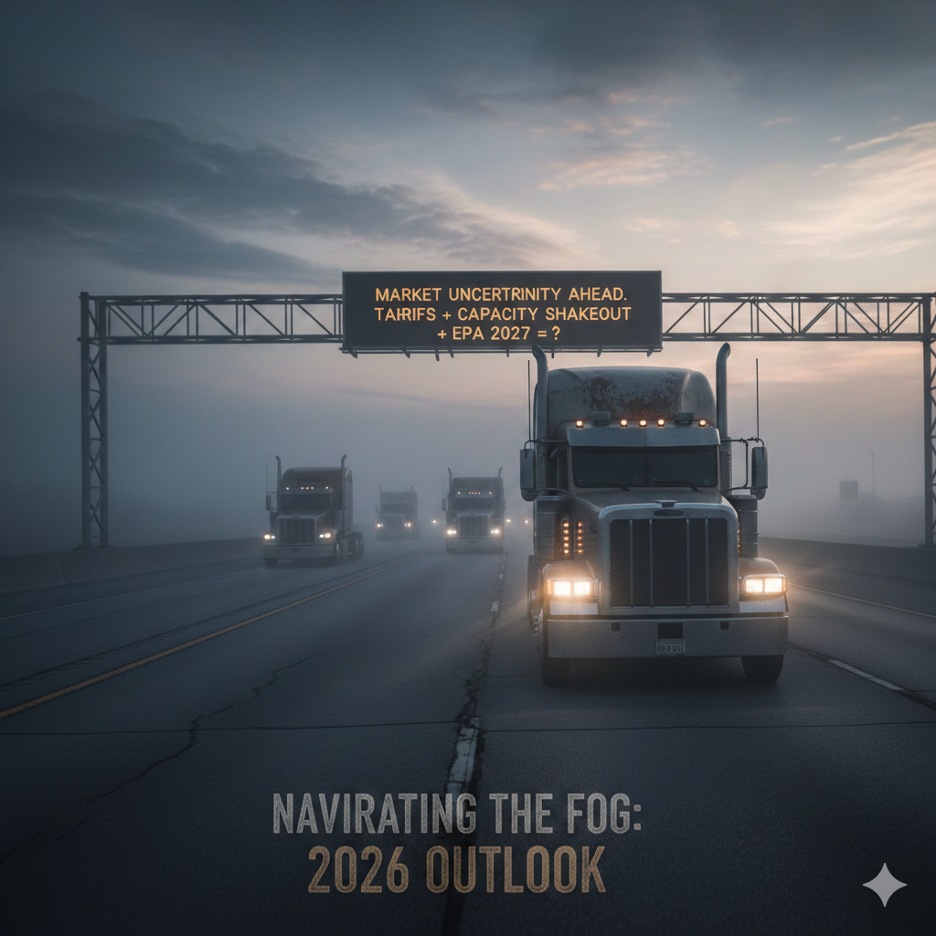
As the North American trucking industry rolls into 2026, the “cautious optimism” that defined much of 2025 is being tested by a stubborn fog of market uncertainty. While the extreme volatility of the post-pandemic years has faded, carriers and shippers alike are finding that the “new normal” is anything but predictable. Heading into 2026, the industry faces a complex landscape where capacity rebalancing, aggressive trade policies, and looming regulatory shifts create a market that is technically recovering but remains psychologically fragile.
The “Lumpy” Demand Cycle
One of the primary drivers of uncertainty is the distortion of traditional freight cycles. In 2025, many shippers engaged in massive “pull-forwards”—importing goods months early to beat anticipated tariff hikes. As we enter 2026, the industry is dealing with the “payback” period of that activity.
Instead of the steady, seasonal volume increases typically seen in Q1 and Q2, the market is facing an “air pocket” of soft demand. Retailers who front-loaded their inventory in late 2025 now have high stock levels, leading to a temporary lull in replenishment orders. For carriers, this makes lane planning nearly impossible, as the usual “peak seasons” have become lumpy and unreliable.
Trade Policy and the Tariff Tangle
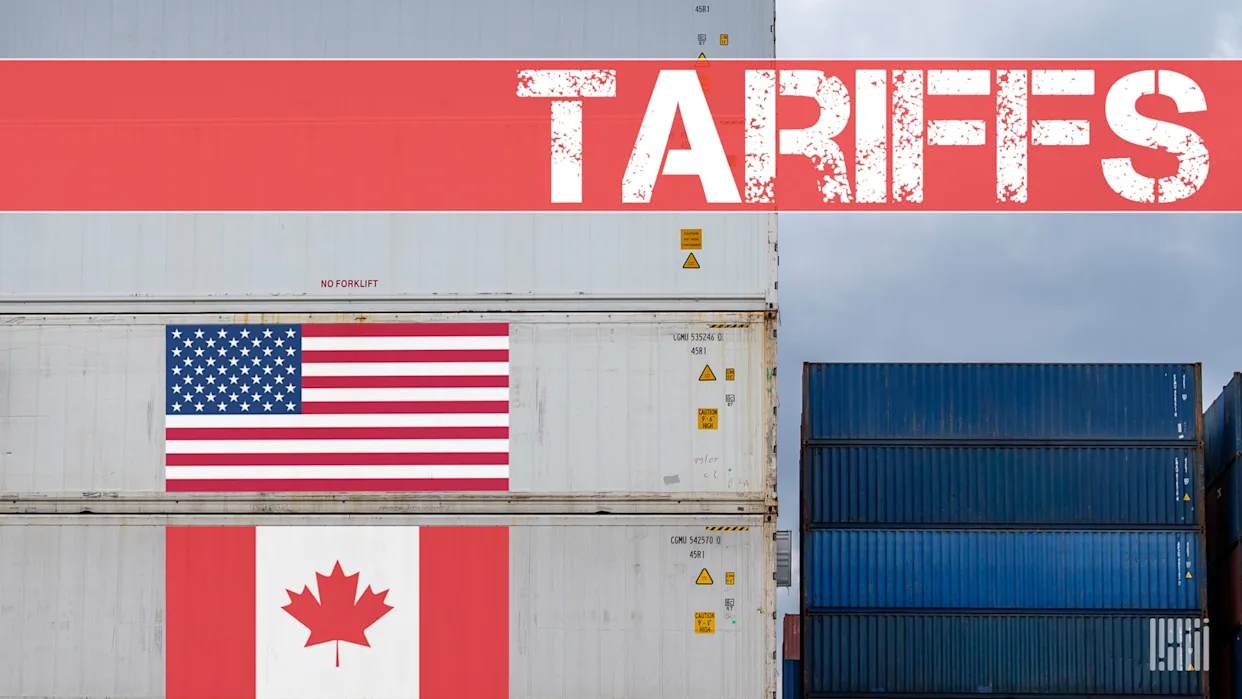
Geopolitical factors, particularly trade tensions and the implementation of Section 232 tariffs, are weighing heavily on the 2026 outlook. These policies have a dual impact: they increase the cost of the trucks themselves and dampen the volume of the goods being hauled.
New tariffs on foreign-sourced components have driven the price of Class 8 tractors to record highs. Consequently, many mid-sized fleets are delaying their equipment replacement cycles, opting to repair aging trucks rather than invest in new ones. This “wait-and-see” approach creates a ripple effect: it keeps less efficient trucks on the road longer, increasing maintenance costs and making it difficult for OEMs (Original Equipment Manufacturers) to forecast production needs for the second half of 2026.

The Great Capacity Correction
The industry is currently in the midst of a painful but necessary capacity shakeout. After years of oversupply, 2026 is seeing an uptick in carrier exits, particularly among smaller owner-operators who can no longer survive on recessionary-level spot rates.
The Federal Motor Carrier Safety Administration (FMCSA) has tightened enforcement on non-domiciled Commercial Driver’s Licenses (CDLs) and English-language proficiency. Analysts estimate that this could remove up to 190,000 drivers from the North American market by the end of 2026. While this contraction should theoretically push freight rates up, the timing is the wildcard. If capacity exits faster than demand recovers, we could see sudden, localized “rate spikes” that disrupt shipper budgets; if demand remains flat, the industry remains stuck in a low-margin grind.
Regulatory and Tech Hurdles
Finally, the “EPA 2027” cliff is casting a shadow over 2026. With strict new nitrogen oxide (NOx) emission standards set for 2027, the industry is debating whether to engage in a massive “pre-buy” in late 2026.
A carrier must decide in early 2026 whether to buy a large fleet of current-model trucks to avoid the more expensive, complex 2027 engines. However, with interest rates still fluctuating and freight volumes “anemic,” committing millions in capital is a massive gamble. This creates a “stutter” in the market where some fleets are buying aggressively while others are paralyzed by the lack of clear economic signals.

Final Thoughts
In 2026, the trucking industry isn’t necessarily in a crisis, but it is in a state of sustained hesitation. The recovery is unfolding gradually rather than abruptly, leaving logistics leaders to manage a market where “busy” doesn’t always mean “profitable.” Success in this environment will require a shift from aggressive growth to extreme operational flexibility, as the only thing certain about the 2026 market is its lack of clarity.