

By: Jag Dhatt
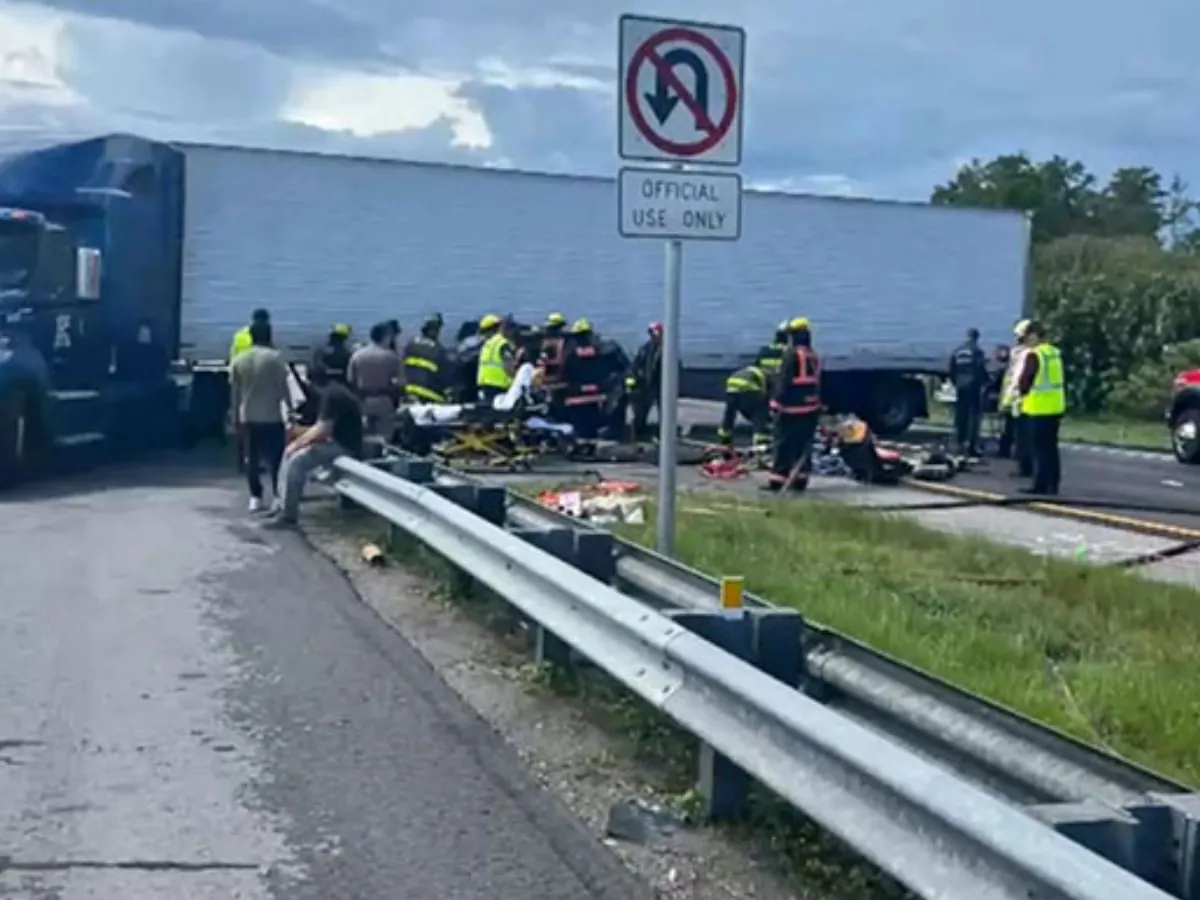
The return of a truck driver accused of killing three people in a fatal crash has ignited a public debate, drawing sharp reactions from officials and raising questions about immigration, licensing, and driver safety. Harjinder Singh, 28, was brought back to Florida after allegedly causing a deadly accident with an illegal U-turn. The U.S. Marshals Service confirmed that Singh is not a U.S. citizen, having entered the country illegally from Mexico in 2018. He later obtained a commercial driver’s license in California, a detail that has become a central point of contention.
Officials in Florida were quick to voice their concerns. St. Lucie County Sheriff Richard Del Toro expressed shock at the driver’s actions, stating that a U-turn of that kind was “bound to cause some kind of crash,” especially on a road where vehicles are often traveling in excess of 70 miles per hour. This sentiment was echoed by Governor Ron DeSantis, who directly addressed the issue of Singh’s language skills. During a press conference, DeSantis questioned how someone who “wasn’t competent in English” could be expected to safely operate a large commercial vehicle and understand crucial road signs.
This has highlighted the divide in state policies. While Florida requires commercial drivers to be U.S. citizens, the National Immigration Law Center points out that 19 states and the District of Columbia issue driver’s licenses regardless of immigration status. This variation in regulations is now under the microscope in light of the tragedy.
In a swift federal response, Senator Marco Rubio announced a pause on all worker visas for commercial truck drivers. This move, however, has been met with skepticism from within the industry. The American Trucking Association reports a nationwide shortage of approximately 60,000 drivers. Al Hanley, the chief operating officer of The CDL School, believes Rubio’s decision will not alleviate this shortage but could have an unintended consequence: increasing the value and earning potential of existing U.S. drivers.
Hanley also clarified that the new federal policy would not affect states like Florida, which already have stricter licensing requirements. The Federal Motor Carrier Safety Administration underscored this point, reminding the public that the authority to issue commercial licenses rests with individual states, not the federal government.
As the U.S. Department of Transportation continues its investigation into the driver, the crash, and the carrier he worked for, the names of the three people who lost their lives have not yet been released, leaving the community to mourn as the broader implications of the tragedy unfold.